
InterStim™ Therapy for Bladder Control
Persistent urinary urgency, frequent bathroom trips, urge incontinence, or difficulty emptying the bladder can interfere with sleep, work, travel, and daily activities. When conservative treatment has not provided adequate relief, InterStim™ Therapy may be an option for appropriately selected patients.
At the Center for Advanced Urology, Stuart M. Diamond, MD, FACS, evaluates the underlying cause of your urinary symptoms, reviews previous treatment, and considers whether sacral neuromodulation is appropriate for your condition.
InterStim™ Therapy is used for certain patients with overactive bladder symptoms, including urinary urge incontinence and significant urgency-frequency, as well as selected cases of non-obstructive urinary retention.

5.0 from 550+ Reviews | Moorestown & Salem, NJ
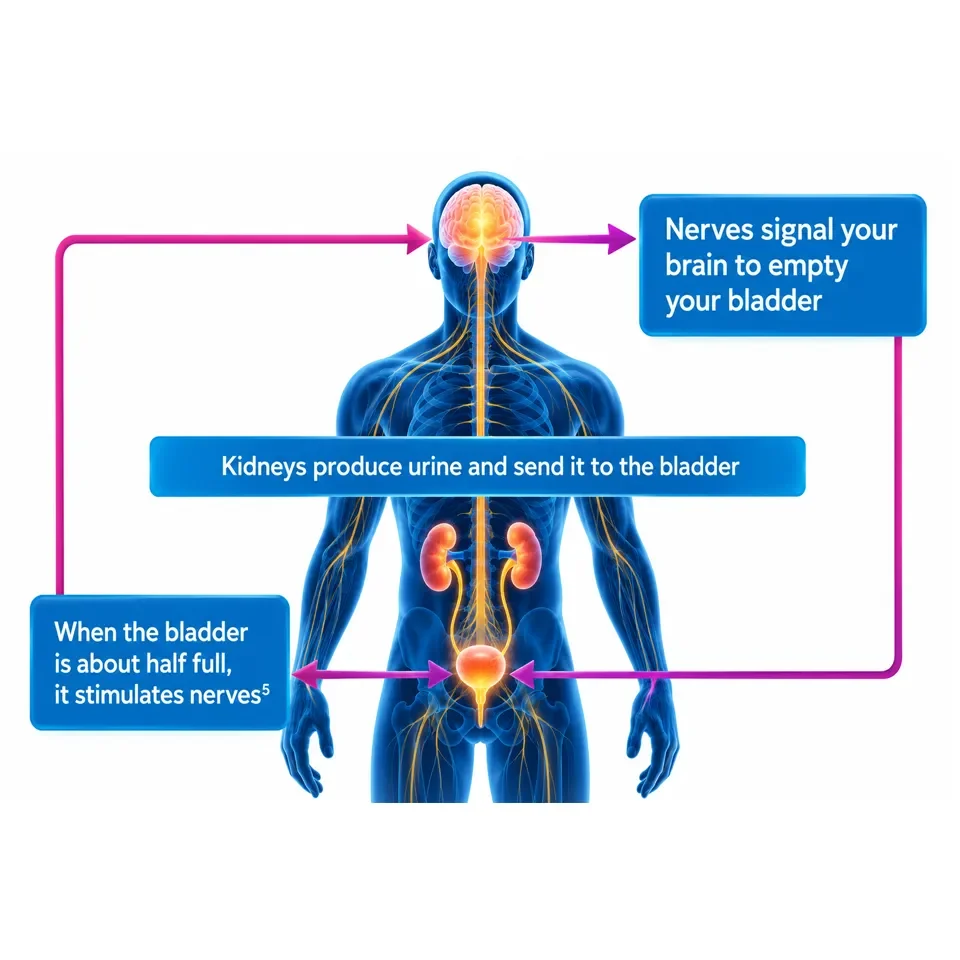
How InterStim™ Therapy Works
InterStim™ Therapy uses sacral neuromodulation to influence the nerve signals involved in bladder storage and emptying.
Bladder control depends on communication between the bladder, spinal cord, pelvic nerves, and brain. When those signals do not function normally, symptoms such as urgency, frequent urination, urge incontinence, or difficulty emptying the bladder can occur.
A thin lead is positioned near an appropriate sacral nerve and connected to a neurostimulator that delivers programmed electrical pulses. The goal is to modify signaling within the bladder-control pathway rather than directly treating the bladder muscle or physically opening the urinary tract.
The response varies by patient, which is why treatment begins with an evaluation and temporary stimulation trial before permanent implantation.
Who May Be a Candidate?
InterStim™ Therapy is generally considered when appropriate conservative treatments have not adequately controlled the relevant symptoms or have caused unacceptable side effects.
Potential candidates may include patients with:
Not every urinary problem is appropriate for sacral neuromodulation. For example, leakage primarily associated with coughing, sneezing, laughing, lifting, or physical activity may indicate stress urinary incontinence and require a different treatment approach. Similarly, urinary retention caused by a physical obstruction requires evaluation and treatment of the underlying cause.

Before recommending InterStim™, Dr. Diamond reviews the nature, severity, and duration of your symptoms along with your medical history and previous treatment.
The evaluation may address:
- Urinary frequency and urgency
- Urge incontinence
- Nighttime urination
- Difficulty starting or maintaining urination
- Incomplete bladder emptying
- Medications
- Previous procedures or treatments
- Other medical conditions that may affect bladder function
Additional testing may be appropriate depending on your symptoms. The purpose is to identify the likely cause of the problem, rule out conditions requiring another treatment, and determine whether a stimulation trial is reasonable.
A temporary stimulation trial allows appropriate patients to evaluate their response before proceeding with permanent implantation.
During the trial, a lead is positioned near the targeted sacral nerve and connected to an external neurostimulator. You will receive instructions for using the system and tracking changes in your urinary symptoms.
The evaluation period depends on the method used. A basic evaluation may last approximately three to seven days, while other approaches may provide a trial of approximately one week.
You may be asked to monitor:
- Bathroom visits
- Urgency episodes
- Urinary leakage
- Pad or protective garment use
- Ability to postpone urination
- Bladder-emptying changes
- Nighttime urination
The goal is to determine whether stimulation produces meaningful improvement. If the trial does not provide an adequate response, permanent implantation may not be recommended.
If the trial demonstrates an appropriate response and you decide to proceed, the temporary system may be followed by permanent implantation.
The permanent system includes a lead positioned near the appropriate sacral nerve and a small neurostimulator placed beneath the skin, commonly in the upper buttock area.
The procedure, anesthesia, and implantation approach depend on your anatomy, medical history, device selection, and physician recommendations.
After implantation, the system delivers programmed stimulation. Settings can be adjusted during follow-up when appropriate.
Your care team will provide individualized instructions before the procedure.
Preparation may include reviewing your medications and supplements, discussing anesthesia requirements, and explaining postoperative activity and wound-care instructions.
Tell your medical team about medications, allergies, implanted medical devices, significant medical conditions, and previous pelvic or spinal procedures. A history of infection or bleeding problems should also be discussed before treatment.
Recovery varies according to the procedure performed and your individual circumstances. Temporary soreness or discomfort around the implantation sites can occur.
You will receive instructions for incision care, activity restrictions, and gradually returning to normal activities. During early healing, certain activities may need to be limited to reduce stress on the healing area and implanted lead.
Depending on the InterStim™ system selected, the neurostimulator may be rechargeable or recharge-free. Your care team will explain how to use and manage the system.
MRI eligibility depends on the exact InterStim™ neurostimulator, lead, and system configuration.
Some current InterStim™ systems with appropriate SureScan™ components allow full-body MRI under specified conditions. Always tell your healthcare providers that you have an implanted neurostimulator before an MRI or other medical procedure.
Keep your device identification information available so the appropriate precautions can be determined.
For appropriately selected patients, InterStim™ Therapy provides another treatment option when conservative measures have not adequately controlled certain bladder symptoms.
Potential advantages include:
- Temporary testing before permanent implantation
- Programmable stimulation
- An implanted treatment system
- Potential improvement in urinary symptoms and daily activities
Results vary. InterStim™ Therapy does not guarantee that all urgency, frequency, leakage, or bladder-emptying problems will resolve. Some patients may require programming adjustments, additional treatment, or further evaluation.
InterStim™ Therapy involves a procedure and an implanted medical device. Potential complications can include:
- Pain or discomfort at the implant site
- New or persistent pain
- Infection
- Lead movement or migration
- Device or technical problems
- Uncomfortable stimulation sensations
- Changes in urinary or bowel function
- Need for additional treatment or surgery
Your physician will discuss the risks, alternatives, and limitations relevant to your medical history before treatment.
Follow-up allows your physician to assess your response and make programming adjustments when appropriate.
Keep track of meaningful changes in urgency, frequency, leakage, nighttime urination, or bladder emptying. This information can help determine whether additional programming or evaluation is needed.
Follow-up is also an opportunity to address discomfort, changes in symptoms, or questions about the device and other medical procedures.

Why Choose Center for Advanced Urology?
Treatment for bladder-control problems begins with identifying the underlying condition rather than assuming every patient needs the same therapy.
Stuart M. Diamond, MD, FACS, is a board-certified urologist and genitourinary surgeon with more than 30 years of experience in urology. His background includes surgical training, academic medicine, clinical research, physician education, and a research fellowship in urologic oncology at Memorial Sloan Kettering Cancer Center.
His experience includes the evaluation and treatment of voiding dysfunction and other urologic conditions. For patients considering sacral neuromodulation, the evaluation focuses on whether the urinary problem is appropriate for this treatment and whether temporary stimulation produces a meaningful response.
The Center for Advanced Urology serves patients throughout the South Jersey and Philadelphia regions.
Our Clinics
The Center for Advanced Urology provides InterStim™ evaluations and bladder-control care at two clinic locations, each serving the communities listed below.
Moorestown
Salem
InterStim™ Therapy FAQs
InterStim™ Therapy is a form of sacral neuromodulation that uses a neurostimulator to deliver electrical stimulation to sacral nerves involved in bladder control.
It is used for certain overactive bladder symptoms, including urinary urge incontinence and significant urgency-frequency, as well as selected forms of non-obstructive urinary retention.
No. Stress urinary incontinence generally involves leakage with activities such as coughing, sneezing, laughing, or exercise and may require a different treatment approach.
No. Appropriate patients can undergo temporary stimulation before deciding whether to proceed with permanent implantation.
The duration depends on the evaluation method. A basic evaluation may last approximately three to seven days, while other approaches may provide a trial of approximately one week.
InterStim™ is intended to manage certain urinary symptoms. Individual results vary, and treatment does not guarantee complete symptom resolution.
Some InterStim™ systems with appropriate SureScan™ components allow full-body MRI under specified conditions. Eligibility depends on the exact device and lead configuration.
Longevity depends on the specific system, whether it is rechargeable or recharge-free, therapy settings, and other factors. Your physician can discuss the expected lifespan of the recommended system.
If temporary stimulation does not produce sufficient improvement, permanent implantation may not be recommended. If symptoms change after implantation, programming adjustments or further evaluation may be appropriate.
Contact Us
Is InterStim™ Therapy Right for You?
Persistent urgency, frequent urination, urinary urge incontinence, and difficulty emptying the bladder can have different causes. When conservative treatment has not provided adequate relief, sacral neuromodulation may be worth discussing with a urologist.
The Center for Advanced Urology provides individualized evaluation for patients considering InterStim™ Therapy for appropriate bladder-control conditions. Schedule an evaluation with our team, serving the South Jersey and Philadelphia regions, to discuss your symptoms and treatment options.