
iTind Temporary Implant
Frequent urination, a weak or interrupted stream, difficulty starting urination, and repeated nighttime bathroom trips are common symptoms of benign prostatic hyperplasia (BPH). When an enlarged prostate narrows the urethra, urine may have difficulty passing through the prostate.
The Center for Advanced Urology offers iTind™ treatment as a minimally invasive option for appropriately selected men with BPH-related urinary symptoms. The temporary device is placed within the prostatic urethra for approximately 5 to 7 days, where it applies controlled pressure to remodel obstructing prostate tissue. It is then removed, leaving no permanent iTind implant.
Dr. Stuart M. Diamond, MD, FACS, evaluates your symptoms, urinary function, prostate anatomy, medical history, and treatment goals before determining whether iTind is appropriate.

5.0 from 550+ Reviews | Moorestown & Salem, NJ
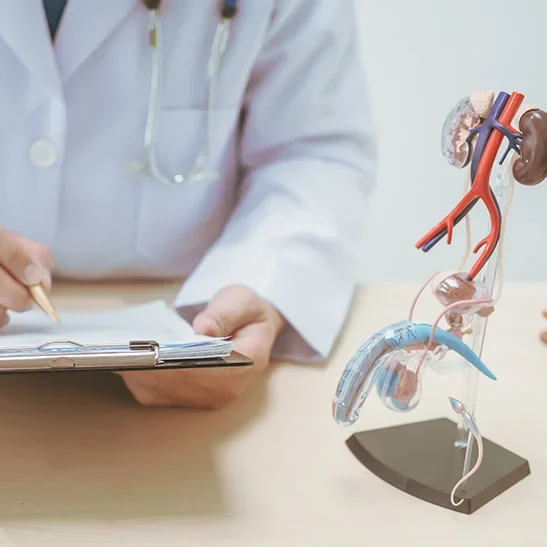
What Is iTind™ Treatment?
iTind is a temporary nitinol device designed to treat urinary symptoms associated with BPH. Unlike a permanent implant, it remains in the prostate for a limited treatment period and is subsequently removed.
The device is introduced through the urethra and positioned within the prostatic urethra using a cystoscope. Once deployed, it applies pressure to targeted areas of prostate tissue over approximately 5 to 7 days. This remodeling process is intended to create more room for urine to pass.
iTind is one of several treatment options for BPH. The appropriate choice depends on factors such as prostate anatomy, symptom severity, urinary function, previous treatment, overall health, and individual preferences.
How the Temporary iTind Device Works
iTind treatment takes place in three main stages.
Placement Through the Urethra
The physician uses a cystoscope to visualize the urinary passage and position the folded device within the prostate. The device is then deployed into its treatment configuration.
Because the device is introduced through the urethra, iTind does not require an external surgical incision.
Prostate Remodeling
The expanded device remains in place for approximately 5 to 7 days. During this period, controlled pressure is applied to selected areas of the prostate to create channels through obstructing tissue.
Temporary urinary symptoms or discomfort can occur while the device is in place. Your physician will explain what to expect during this period and which symptoms warrant a call to the practice.
Device Removal
After the treatment period, the iTind device is removed. The device itself does not remain permanently implanted.
The Center for Advanced Urology's current patient information describes placement and removal using a cystoscopic approach.

iTind may be considered for men with bothersome lower urinary tract symptoms caused by BPH who are looking for a minimally invasive treatment option. A diagnosis of BPH alone does not automatically make someone a candidate.
Symptoms that may prompt an evaluation include:
- Weak or interrupted urine stream
- Difficulty starting urination
- Frequent daytime urination
- Urinary urgency
- Waking repeatedly at night to urinate
- A sensation of incomplete bladder emptying
- Urinary symptoms that interfere with sleep or daily activities
- Persistent symptoms despite medication
- A preference for a temporary treatment rather than a permanent implant
Prostate size and configuration, bladder function, prior prostate or urinary procedures, medications, and other urologic conditions may affect treatment selection.
Preparation depends on your health, medications, and treatment plan. Tell Dr. Diamond about all prescription medications, over-the-counter medications, vitamins, and supplements you take.
Blood-thinning medications require particular attention. Do not stop an anticoagulant or antiplatelet medication without instructions from your physician.
Your consultation may also address:
- Previous prostate, bladder, or urethral procedures
- Previous BPH medications or treatments
- Urinary infections
- Medication allergies
- Other medical conditions
- Previous problems with anesthesia or procedural medications
- Your expectations for treatment and recovery
You will receive specific preparation and aftercare instructions based on your circumstances.
BPH is only one possible cause of urinary difficulties. Bladder dysfunction, urethral conditions, infection, medications, and other urologic problems can produce similar symptoms.
The Center for Advanced Urology may use diagnostic testing when clinically appropriate to determine what is contributing to your symptoms. Available diagnostic services include cystoscopy, urodynamics, and the UroCuff Test.
This evaluation helps Dr. Diamond determine whether prostate obstruction is contributing to your symptoms and whether iTind is a reasonable treatment option.
Device Placement
The iTind device is introduced through the urethra and positioned within the prostate using cystoscopic visualization. The Center for Advanced Urology's current information describes iTind as an in-office procedure, although treatment arrangements can vary based on individual circumstances.
Your physician will explain the medications or anesthesia used and the instructions to follow after placement.
The 5- to 7-Day Treatment Period
The device remains in place while the prostate undergoes the intended remodeling process.
During this period, some men may experience urinary urgency, increased frequency, burning with urination, difficulty urinating, discomfort, or blood in the urine. The severity and duration of these symptoms vary.
Dr. Diamond will explain what you should monitor while the device is in place and when to contact the practice.
Removal
After approximately 5 to 7 days, you return for removal of the temporary device. No permanent iTind implant remains after the device has been removed.
Recovery varies from patient to patient. The Center for Advanced Urology's current patient information states that most patients can return to their normal active lifestyle within a day or two after device removal.
Some urinary symptoms may continue during the recovery period. Your immediate symptoms after removal do not necessarily represent your eventual treatment outcome.
Follow the activity, medication, hydration, and other aftercare instructions provided by your physician. Contact the practice if you develop symptoms that concern you or that differ from the expected recovery course.
Every medical procedure has potential risks. Temporary urinary symptoms are possible while the iTind device is in place and during the recovery period.
Potential side effects include:
- Blood in the urine
- Urinary urgency
- Increased urinary frequency
- Burning or discomfort during urination
- Difficulty urinating
- Urinary tract infection
The Center for Advanced Urology's current patient information advises patients to contact their physician for significant bleeding, a temperature above 101°F, chills, or shaking.
Your individual risks may be influenced by your medical history, medications, prostate anatomy, urinary function, and other health factors. These considerations should be discussed with your urologist before treatment.
iTind offers several characteristics that may appeal to appropriately selected patients, but it is not appropriate for every man with BPH.
- Temporary treatment: The device remains in place for approximately 5 to 7 days and is then removed.
- Minimally invasive placement: The device is introduced through the urethra using a cystoscope rather than through an external surgical incision.
- No permanent iTind implant: Once the device is removed, there is no permanent iTind device left in the prostate.
- Short treatment period: The active device treatment takes place over several days rather than requiring a permanent implant.
- Sexual-function considerations: Clinical studies have reported preservation of sexual and ejaculatory function following iTind treatment. Individual outcomes vary, and no specific result can be guaranteed.
- Variable results: Improvement in urinary symptoms depends on factors such as prostate anatomy, bladder function, symptom severity, and individual response to treatment.
Follow-Up After Treatment
Follow-up remains important after the device is removed. Dr. Diamond can assess changes in your urinary symptoms and determine whether your recovery is progressing as expected.
Follow-up may include discussion of:
If symptoms persist or change unexpectedly, further evaluation may be recommended to determine whether another condition is contributing to your urinary problems.

Why Choose Center for Advanced Urology for iTind?
Selecting a BPH treatment begins with determining what is causing your urinary symptoms and whether the treatment fits your anatomy and medical circumstances.
Stuart M. Diamond, MD, FACS, is a board-certified urologist and genitourinary surgeon with more than 30 years of experience in urology. His clinical background includes general urology, prostate care, voiding dysfunction, stone disease, and advanced surgical care.
At the Center for Advanced Urology, we evaluate BPH symptoms in the context of your broader urinary health. When appropriate, diagnostic testing can provide additional information about prostate obstruction and bladder function before treatment is selected.
We serve men throughout the South Jersey and Philadelphia regions who want to discuss BPH treatment options with our urology practice.
Our Clinics
The Center for Advanced Urology provides BPH evaluation and treatment at two clinic locations, each serving the communities listed below.
Moorestown
Salem
iTind™ FAQs
iTind is a temporary treatment for urinary symptoms associated with benign prostatic hyperplasia, or BPH. It is designed to remodel obstructing prostate tissue and improve the passage of urine in appropriately selected patients.
No. iTind is designed for temporary placement. The device generally remains in place for approximately 5 to 7 days before it is removed.
The treatment period is approximately 5 to 7 days. You return to the practice for removal after this period.
The Center for Advanced Urology's current patient information describes iTind as an in-office procedure. Treatment arrangements may vary according to individual circumstances.
iTind is designed as a catheter-free treatment, but individual circumstances can differ. Your physician will determine whether catheterization is necessary based on your condition.
The Center for Advanced Urology reports that most patients can return to their normal active lifestyle within a day or two after device removal. Your actual recovery may vary, and you should follow the activity instructions provided by your physician.
Clinical studies have reported preservation of sexual and ejaculatory function following iTind treatment. Individual outcomes vary, so discuss sexual-function considerations with your urologist before treatment.
The timing and degree of symptom improvement vary. Some patients may notice changes relatively soon after treatment, while others may require more time to assess their response. Symptoms immediately after device removal do not necessarily reflect the eventual outcome.
iTind is one option for BPH-related urinary symptoms. If your prostate anatomy, bladder function, medical history, or treatment goals make another treatment more appropriate, Dr. Diamond can discuss other options available through the Center for Advanced Urology.
Contact Us
Is iTind Right for Your BPH Symptoms?
Persistent urinary symptoms can affect sleep, daily routines, and your ability to empty your bladder comfortably. An evaluation can help determine whether an enlarged prostate is contributing to the problem and whether a minimally invasive treatment such as iTind may be appropriate.
Dr. Stuart M. Diamond, MD, FACS, can evaluate your symptoms, urinary function, prostate anatomy, and medical history and discuss the available treatment options with you.
Contact the Center for Advanced Urology, serving the South Jersey and Philadelphia regions, to schedule a consultation.