
Urgent® PC Therapy for Overactive Bladder
Sudden urinary urgency, frequent bathroom trips, nighttime urination, and leakage before reaching the bathroom can be symptoms of overactive bladder (OAB). When behavioral changes or medication have not provided enough relief, percutaneous tibial nerve stimulation (PTNS) may offer another treatment option.
At the Center for Advanced Urology, Urgent® PC Therapy uses controlled electrical stimulation near the posterior tibial nerve at the ankle to influence nerve pathways involved in bladder control. Stuart M. Diamond, MD, FACS, evaluates your symptoms, medical history, previous treatment, and overall health to determine whether PTNS is appropriate.
Unlike sacral neuromodulation, PTNS does not require a permanently implanted neurostimulator. Treatment is delivered through a series of office-based sessions, followed by maintenance therapy for patients who respond.

5.0 from 550+ Reviews | Moorestown & Salem, NJ
What Is Urgent® PC Therapy?
Urgent® PC is a system used to deliver percutaneous tibial nerve stimulation, or PTNS, for certain urinary symptoms associated with overactive bladder.
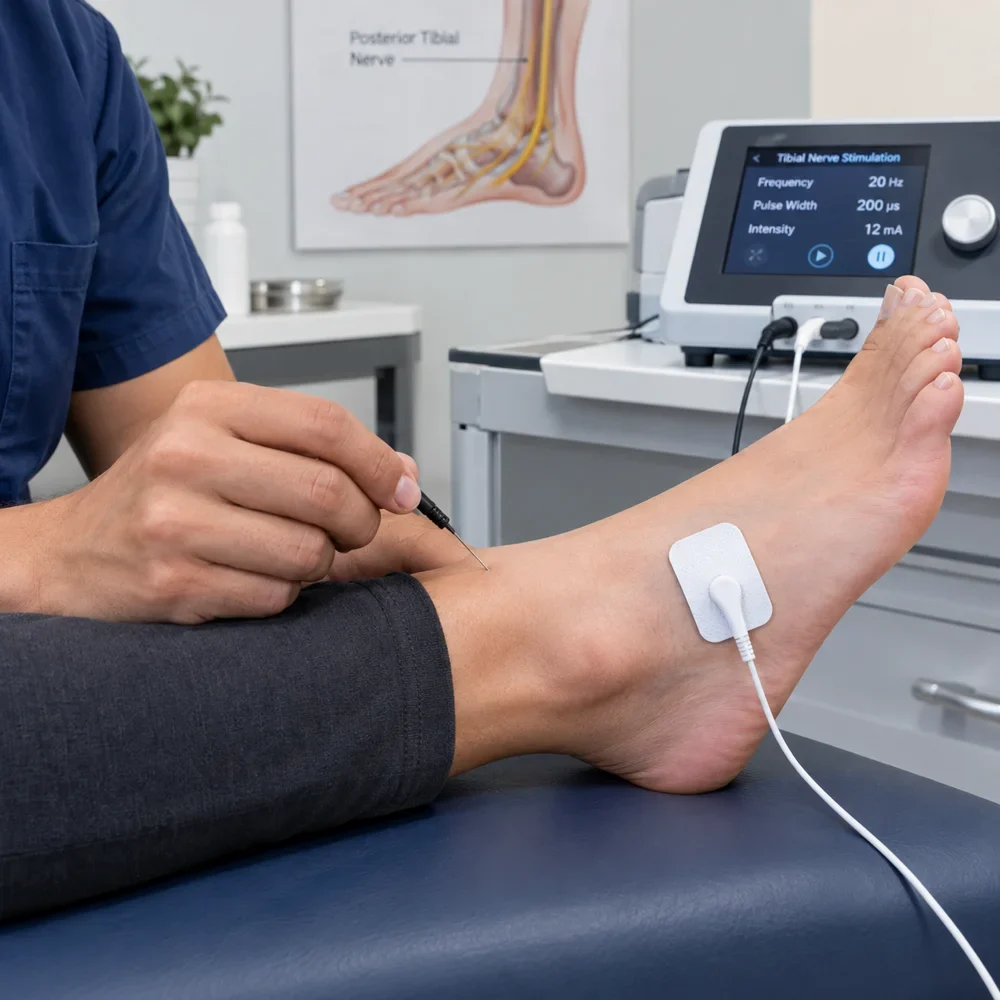
During treatment, a small needle electrode is placed near the posterior tibial nerve at the ankle, along with a surface electrode on the foot. Controlled electrical stimulation is then delivered through the tibial nerve.
The tibial nerve contains sensory and motor fibers connected to the sacral nerve roots involved in bladder and pelvic function. PTNS is thought to influence these neural pathways and modify bladder signaling.
The exact mechanism by which PTNS improves overactive bladder symptoms is not completely understood. The treatment does not physically remove or alter the bladder. Its purpose is to influence the neural signaling involved in bladder storage and urinary control.

What Symptoms Can PTNS Treat?
PTNS is primarily used for symptoms associated with overactive bladder, including:
These symptoms can have different causes, so determining whether they fit an overactive bladder pattern is an important first step.

Urgent® PC may be considered for adults whose OAB symptoms continue to interfere with daily life despite conservative treatment or medication.
PTNS may be discussed when you have:
- Persistent urinary urgency
- Frequent daytime urination
- Urgency-related leakage
- Symptoms that interfere with work, sleep, travel, or social activities
- Inadequate improvement with behavioral strategies
- Medication side effects or other reasons for discontinuing medication
- A preference for treatment without a permanent implanted device
The presence of urinary urgency or frequency does not automatically make PTNS appropriate. Your physician must first determine whether OAB is the likely cause of the symptoms.
Not every urinary problem is caused by overactive bladder.
Leakage associated primarily with coughing, sneezing, laughing, lifting, or exercise may indicate stress urinary incontinence rather than OAB. Urinary symptoms can also result from infection, bladder stones, prostate obstruction, neurological conditions, medications, and other urologic disorders.
Treatment begins with identifying the underlying problem rather than treating the symptom alone.
Before starting Urgent® PC Therapy, Dr. Diamond reviews your urinary symptoms, medical history, medications, previous treatments, and overall health.
Your evaluation may include questions about:
- Daytime urinary frequency
- Nighttime urination
- Urgency episodes
- Urgency-related leakage
- How long symptoms have been present
- Previous medications or bladder treatments
- Fluid intake and other factors affecting symptoms
- Other urinary or pelvic symptoms
Additional testing may be recommended when the history suggests another possible cause or when more information about bladder function is needed.
Keeping a Bladder Diary
A bladder diary can help document how often you urinate, when urgency occurs, how much you drink, and whether leakage occurs.
It can also provide a baseline for comparing symptoms during treatment. Your physician may use this information when evaluating whether PTNS is producing a meaningful change.
PTNS is performed in the office, and you remain awake during treatment.
You will typically sit comfortably while the area near the ankle is prepared. A small needle electrode is placed near the posterior tibial nerve, and a surface electrode is positioned on the foot.
The Urgent® PC device then delivers controlled electrical stimulation.
What Does PTNS Feel Like?
You may feel tingling, pulsing, or a mild electrical sensation around the ankle, foot, or lower leg.
The stimulation level can be adjusted by the treating clinician. The goal is to provide therapeutic stimulation without significant discomfort.
How Long Does Treatment Take?
A typical PTNS treatment session lasts about 30 minutes.
There is no surgical implantation, so treatment does not involve the recovery period associated with an implanted neuromodulation device. You can generally return to your usual activities after the session unless your physician gives you different instructions.
PTNS is delivered as a series of treatments rather than a single session.
A commonly used initial treatment schedule consists of approximately 30-minute sessions once a week for 12 weeks.
The repeated stimulation allows your physician to evaluate whether urgency, frequency, nighttime urination, or urgency-related leakage is improving.
A single session does not necessarily indicate how well you will respond to the full treatment course.
Patients who respond to PTNS may need maintenance treatments to preserve symptom improvement.
The frequency of maintenance sessions varies between patients. Your physician can adjust the schedule according to your symptoms and response to treatment.
Because the benefits of PTNS may decrease after treatment stops, ongoing therapy may be appropriate for patients who benefit from the initial treatment course.
The goal of PTNS is meaningful improvement in bladder symptoms and daily function.
During follow-up, you may be asked about:
- Urinary urgency
- Bathroom frequency
- Urgency-related leakage
- Nighttime urination
- Ability to delay urination
- Overall impact on daily activities
Your physician may also compare your symptoms with information recorded before treatment, such as a bladder diary.
If improvement is limited, Dr. Diamond can reassess your symptoms and determine whether another treatment approach would be more appropriate.
PTNS and sacral neuromodulation both use electrical stimulation to influence bladder-control pathways, but the treatments are delivered differently.
PTNS uses a temporary needle electrode near the tibial nerve during recurring office visits. It does not require a permanently implanted neurostimulator.
Sacral neuromodulation, such as InterStim™ therapy, uses an implanted lead and neurostimulator to provide stimulation to the sacral nerves.
The appropriate approach depends on your symptoms, previous treatments, medical history, preferences, and response to therapy.
One of the main differences between PTNS and implanted neuromodulation is that PTNS does not require permanent implantation.
Potential characteristics of Urgent® PC Therapy include:
- Office-based treatment
- No permanently implanted neurostimulator
- No incision for device implantation
- Approximately 30-minute sessions
- A treatment option for appropriately selected OAB patients
- The ability to monitor response during a structured treatment course
- Maintenance treatment that can be adjusted according to individual response
PTNS does not guarantee complete resolution of overactive bladder symptoms. Some patients experience significant improvement, while others have a partial or limited response.
Treatment selection should be based on the patient's symptoms, diagnosis, previous treatment, and goals.
PTNS is minimally invasive, but side effects can occur.
Possible effects at or near the treatment site include:
- Mild pain or tenderness
- Bruising
- Minor bleeding
- Skin irritation
- Temporary tingling or stimulation sensations
Your care team can adjust the stimulation level if treatment becomes uncomfortable.
Your physician will also review your medical history and any implanted medical devices or other conditions that may affect whether PTNS is appropriate.
Contact the office if you develop concerning symptoms after treatment or have questions about a reaction at the treatment site.
The objective of PTNS is to reduce the severity and frequency of overactive bladder symptoms. It is not intended to guarantee that urinary problems will disappear completely.
A meaningful response may include:
- Fewer urgency episodes
- Fewer bathroom trips
- Longer intervals between urination
- Fewer nighttime trips to the bathroom
- Fewer episodes of urgency-related leakage
- Greater ability to postpone urination
Clinical studies have reported improvement in overactive bladder symptoms with PTNS, although individual responses vary.
Because ongoing stimulation may be needed to maintain improvement, your long-term treatment plan will depend on how your symptoms respond.
Urgent® PC Therapy in South Jersey & Philadelphia
Center for Advanced Urology provides urologic care through its New Jersey offices.
Salem
MOORESTOWN
Patients can contact the practice to discuss persistent overactive bladder symptoms and whether PTNS may be appropriate.

Why Choose Center for Advanced Urology?
Effective bladder-control treatment starts with determining what is actually causing the urinary symptoms.
Stuart M. Diamond, MD, FACS, is a board-certified urologist with more than 30 years of urologic experience. At the Center for Advanced Urology, he evaluates urinary symptoms in the context of the patient's medical history, previous treatments, and overall health.
PTNS is considered alongside other treatment options rather than as a universal solution for urgency, frequency, or leakage. If symptoms suggest another condition, additional evaluation may be appropriate before treatment begins.
The Center for Advanced Urology serves patients throughout the South Jersey and Philadelphia regions.
Our Clinics
The Center for Advanced Urology provides overactive bladder care at two clinic locations, each serving the communities listed below.
Moorestown
Salem
Urgent® PC FAQs
Urgent® PC is a system used to deliver percutaneous tibial nerve stimulation for certain overactive bladder symptoms. Treatment uses electrical stimulation near the posterior tibial nerve at the ankle.
Yes. PTNS is a treatment option for appropriately selected patients with symptoms such as urinary urgency, frequency, and urgency urinary incontinence.
PTNS does not require surgical implantation of a permanent device. A temporary needle electrode is placed near the tibial nerve during each treatment session and removed afterward.
You may feel tingling, pulsing, or mild stimulation around the ankle or foot. The stimulation can be adjusted if the sensation becomes uncomfortable.
A typical session lasts approximately 30 minutes.
A commonly used initial course involves weekly 30-minute treatments for 12 weeks. Patients who respond may need ongoing maintenance sessions.
Often, patients who benefit from PTNS need maintenance therapy to help preserve symptom improvement. The schedule varies according to the individual response.
No. PTNS stimulates the tibial nerve through recurring office sessions, while InterStim™ uses an implanted system for sacral neuromodulation.
PTNS is intended to manage symptoms rather than guarantee a cure. Some patients experience substantial improvement, while others experience partial or limited benefit.
Dr. Diamond can reassess your diagnosis and discuss other treatment options. Depending on your symptoms and previous treatment, alternatives may include behavioral strategies, medication, other minimally invasive treatments, or sacral neuromodulation.
Contact Us
Discuss Your Overactive Bladder Treatment Options
Persistent urgency, frequent urination, nighttime bathroom trips, and urgency-related leakage can interfere with everyday life. When conservative measures or medication have not provided enough relief, PTNS may be an option worth discussing with a urologist.
At the Center for Advanced Urology, Dr. Stuart Diamond evaluates your symptoms and medical history to determine whether Urgent® PC Therapy is appropriate and whether another treatment may better address your condition.
Call Center for Advanced Urology at (856) 339-4466 to schedule an evaluation.